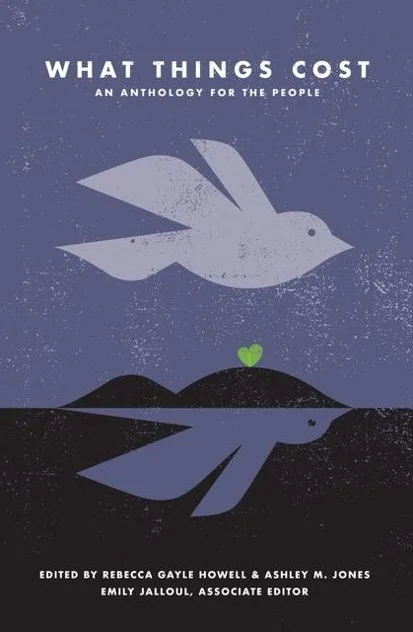
What Things Cost: an anthology for the people is the first major anthology of labor writing in nearly a century. Here, editors Rebecca Gayle Howell, Ashley M. Jones, and Emily Jalloul bring together more than one hundred contemporary writers singing out from the corners of the 99 Percent, each telling their own truth of today's economy.
In his final days, Rev. Dr. Martin Luther King Jr. called for a "multiracial coalition of the working poor." King hoped this coalition would become the next civil rights movement but he was assassinated before he could see it emerge as the Poor People's Campaign, now led by Rev. Dr. William J. Barber II and Rev. Dr. Liz Theoharis. King's last lesson—about the dangers of dividing working people—inspired the conversation gathered here by Jones and Howell.
Fifty-five years after the assassination of King, What Things Cost collects stories that are honest, provocative, and galvanizing, sharing the hidden costs of labor and laboring in the United States of America. Voices such as Sonia Sanchez, Faisal Mohyuddin, Natalie Diaz, Ocean Vuong, Silas House, Sonia Guiñansaca, Reginald Dwayne Betts, Victoria Chang, Crystal Wilkinson, Gerald Stern, and Jericho Brown weave together the living stories of the campaign's broad swath of supporters, creating a literary tapestry that depicts the struggle and solidarity behind the work of building a more just America.
What Things Cost:
An Anthology for the People
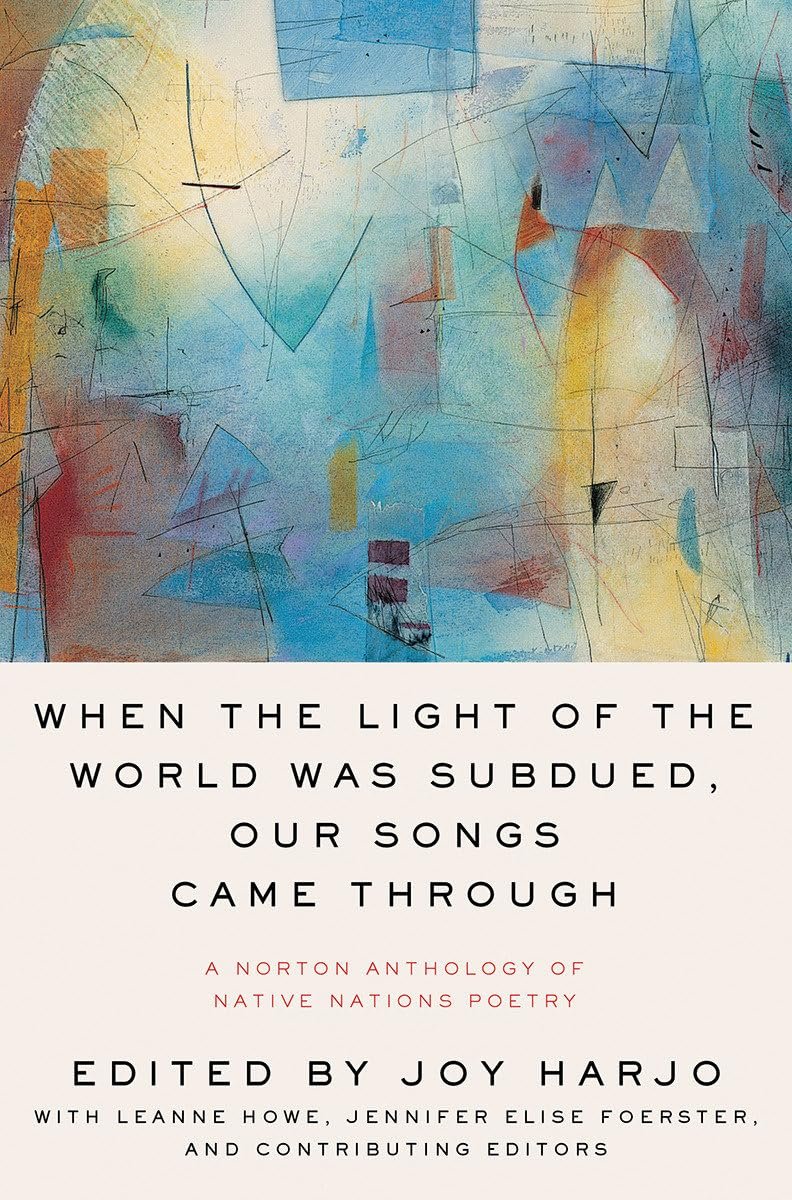
When the Light of the World Was Subdued,
Our Songs Came Through
Selected as one of Oprah Winfrey's "Books That Help Me Through"
United States Poet Laureate Joy Harjo gathers the work of more than 160 poets, representing nearly 100 indigenous nations, into the first historically comprehensive Native poetry anthology.
This landmark anthology celebrates the indigenous peoples of North America, the first poets of this country, whose literary traditions stretch back centuries. Opening with a blessing from Pulitzer Prize–winner N. Scott Momaday, the book contains powerful introductions from contributing editors who represent the five geographically organized sections. Each section begins with a poem from traditional oral literatures and closes with emerging poets, ranging from Eleazar, a seventeenth-century Native student at Harvard, to Jake Skeets, a young Diné poet born in 1991, and including renowned writers such as Luci Tapahanso, Natalie Diaz, Layli Long Soldier, and Ray Young Bear. When the Light of the World Was Subdued, Our Songs Came Through offers the extraordinary sweep of Native literature, without which no study of American poetry is complete.